9849536206
At a Glance

Duration
6

Activity
Grade 2

Best Season
March, April, May, September, October, November

Difficulty
Grade 2

Group Size

Transportation
Public Bus and Private Jeep

Meals
Breakfast, Lunch, Dinner

Accomodation
Hotels / Tea houses / Lodges
Overview
- Travel Insurance Required: You must have valid international travel insurance that covers high-altitude trekking and emergency evacuation.
- ATM Accessibility: ATM machines are installed in Syabrubesi and Kyanjin Gompa, even though their availability is not guarenteed during peak seasons. It is advised to bring enough cash for the entire trek.
- Basic Lodging: Tea houses along the route offer simple rooms and meals. Don't expect luxury.
- Altitude Awareness: The trek reaches altitudes over 3,800 meters. Be aware of altitude sickness symptoms and listen to your guide.
- Pack Light but Smart: Weather can change quickly. Bring layers, a rain jacket, and good trekking shoes.
- Connectivity is Limited: Mobile signals may be weak or unavailable. Inform family or contacts in advance.
Itineraries
Today marks the beginning of your trek from Syaphrubesi to Lama Hotel, located at an altitude of 2,500 meters. Lama Hotel is a quaint village nestled deep within the forests of Langtang National Park, situated on the banks of the Langtang River. Your day begins with a hearty breakfast at 7:30 AM, allowing you ample time to prepare for the trek. By 8:00 AM, you'll start your hike. Leaving Syaphrubesi behind, you'll soon cross two rivers: the Bhotekoshi River flowing from the north and the Langtang Khola from the east. From here, you'll walk alongside the Langtang Khola, which will remain on your right for most of the day. After about 45 minutes of relatively flat walking, you'll reach the village of Domain, which will serve as your first rest stop. Following a brief pause, the trek continues to the village of Bamboo (1,970m), which involves a steep ascent of approximately two hours from Domain. Along the way, you'll pass through the small village of Tiwari. Upon reaching Bamboo, you'll break for lunch and recharge for the next part of your journey. Post-lunch, the trek resumes towards Lama Hotel, which is another 2-3 hours walk from Bamboo. Lama Hotel is perched just above the flowing Langtang River. Once you arrive and settle in, take some time to explore the area. A walk down to the river offers a perfect opportunity to capture stunning photographs and enjoy the serene, chilly waters, providing a soothing end to your day's trek and relieving you of any fatigue. Overnight stay at Lama Hotel.
Today’s journey takes you from Lama Hotel to Langtang Village, which stands at 3,430 meters above sea level. After breakfast at 7:30 AM, you'll begin the 6–7-hour trek, predominantly uphill with occasional flat sections. Your trek will lead you through dense forests, accompanied by the soothing sounds of the river and the melodic chirping of birds. Along the way, you'll encounter numerous picturesque water crossings and discover a secluded pond hidden by the lush bushes lining the trail. After 3-4 hours of steady uphill trekking, you'll arrive at the charming village of Ghodatabela, where you'll stop for lunch. Ghodatabela is a striking location, marking the transition from forest vegetation to alpine vegetation. From this point onward, the dense forest gives way to stunning rocky hills and distant mountain vistas. Post lunch, you'll continue your trek for another 2-3 hours to reach Langtang Village. Before reaching your destination, you'll pass by the remnants of the old Langtang Village, which was tragically destroyed by the 2015 earthquake. The village was almost entirely swept away, save for one house that survived due to its fortunate position under a rocky hill—a stark reminder of nature's power. The new Langtang Village is just a 10-minute walk from the old site. Upon arrival, you'll settle in and have the opportunity to explore the village and reflect on the resilience of the local community. Overnight stay at Langtang Village.
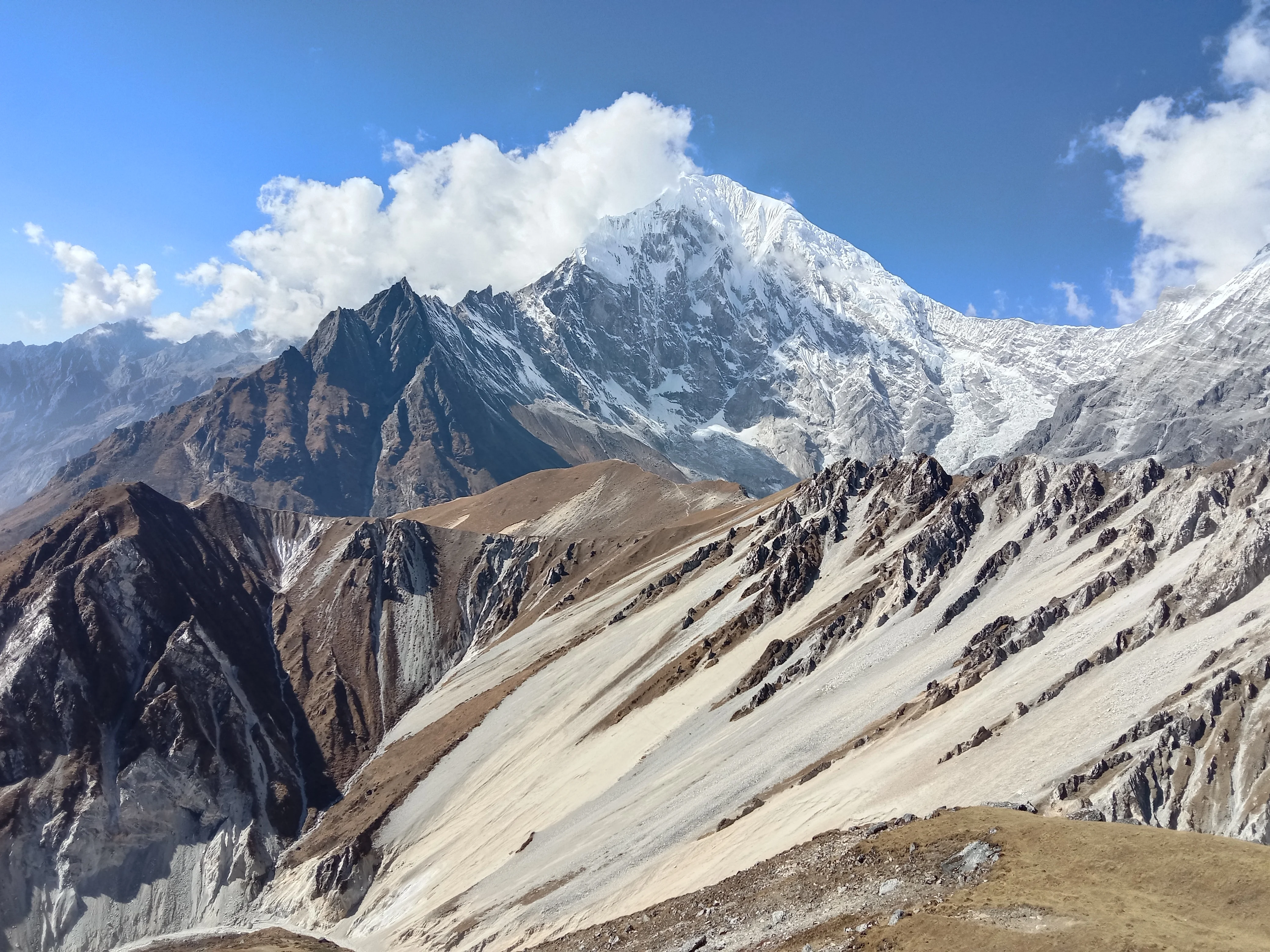
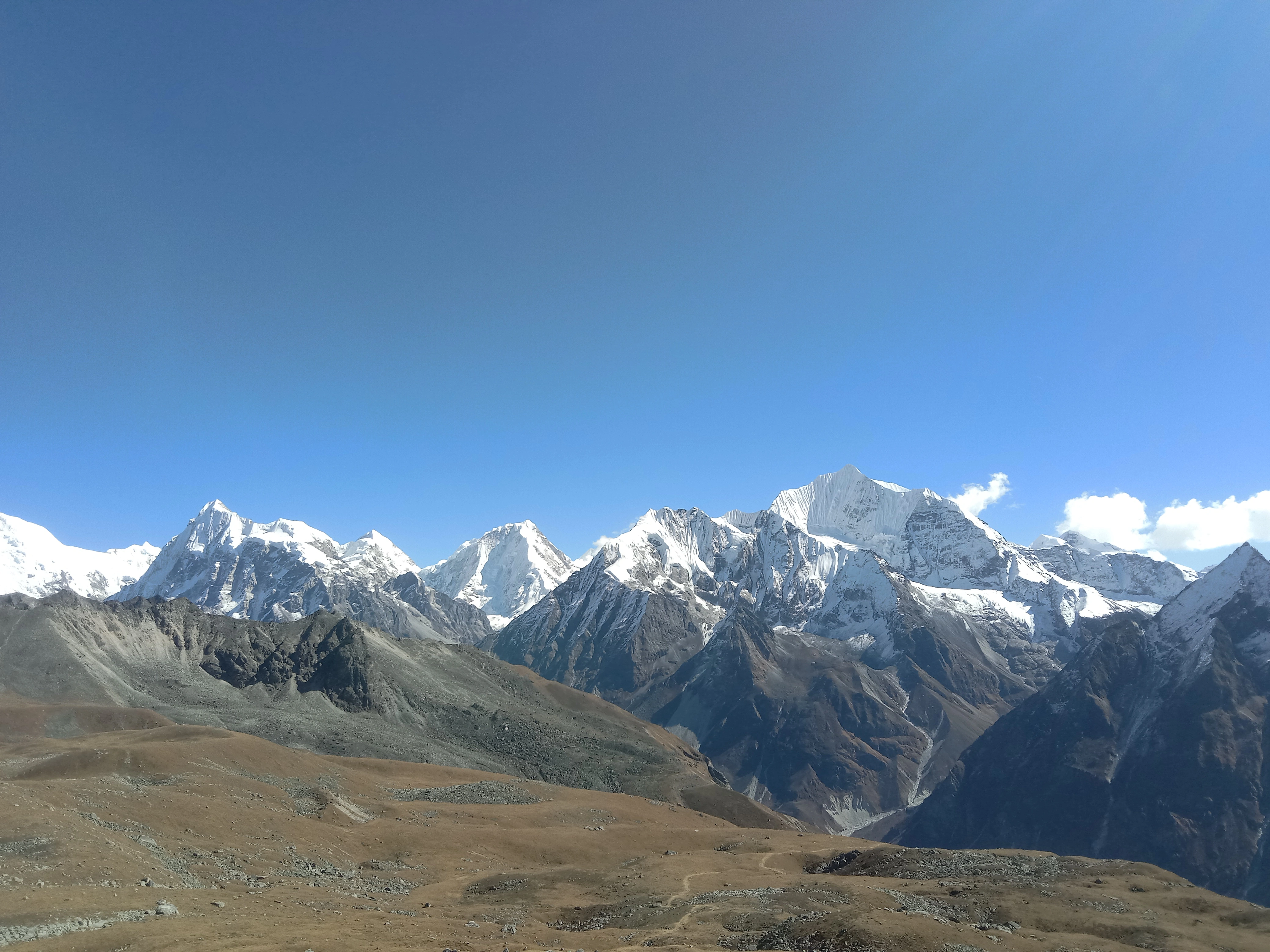
Today, you'll embark on a trek to Kyanjin Gompa, a picturesque village nestled at the base of Mt. Langtang Lirung (7,227 meters) at an altitude of 3,860 meters. This hike is shorter compared to the previous day, taking approximately 4-5 hours, allowing you to reach Kyanjin Gompa in time for lunch. As you ascend from Langtang Village, you'll pass through the village of Mundu. From here, you'll start to see an array of majestic peaks including Pongen Dopku (5,928m), Kanjala Chuli (5,652m), Peak 5843 (5,843m), Baden-Powell Scout Peak (5,710m), Dorje Lakpa (6,966m), and Naya Kanga (5,846m). Continuing further and crossing the village of Sindhum, you'll be treated to stunning views of the northern mountains, previously hidden by rocky hills. These include prominent viewpoints like Kyanjin Ri (4,604m), Tserko Ri (5,010m), and Mt. Yansa-Tsenji (6,567m), among others. The journey is filled with awe-inspiring mountain views, sacred Buddhist monasteries, and multiple water crossings, making it a truly aesthetic experience. The breathtaking landscapes and cultural landmarks will captivate you throughout the trek. Upon reaching Kyanjin Gompa, you'll check into your hotel and have lunch. One of the highlights of this village is the renowned organic yak cheese produced at the local yak cheese factory. Be sure to try some, as it is famous throughout Nepal. After lunch, take some time to explore the village. Stroll around, soak in the scenic beauty of the mountains, and immerse yourself in the local Sherpa culture. Overnight stay at Kyanjin Gompa.
Today, you'll hike to the highest viewpoint around Kyanjin Gompa: Tserko Ri, situated at an altitude of 4,985 meters. While the exact height is debated, with some sources listing it as more or less than 5,000 meters, our team has determined 4,985 meters to be the most accurate measurement. Variations in readings can occur due to factors like sunlight and wind affecting satellite signals. Your journey to Tserko Ri involves a steep ascent of 4-5 hours. Be prepared for the challenging climb by bringing snacks, a packed lunch, and plenty of water, as there are no tea houses along the route. Additionally, pack a warm down jacket; you might not need it while trekking, but it will be essential at the summit where it can get extremely cold and windy. The view from Tserko Ri is truly spectacular. You'll be rewarded with panoramic vistas of numerous peaks, including Pongen Dopku (5,928m), Kanjala Chuli (5,652m), Peak 5843 (5,843m), Baden-Powell Scout Peak (5,710m), Dorje Lakpa (6,966m), Naya Kanga (5,846m), Langtang Lirung (7,227m), Kyanjin Ri (4,604m), and Mt. Yansa-Tsenji (6,567m). Despite Tserko Ri being the highest viewpoint in the area, the eight-thousander Shishapangma (8,027m) is not visible from here. However, it can be seen from Yala Peak, a climbable peak at 5,500 meters that requires no special permits. Once you reach Tserko Ri, enjoy your packed lunch while taking in the breathtaking mountain scenery. After some time spent at the summit, you'll make your way back to Kyanjin Gompa, which takes about 3-4 hours of downhill trekking. Overnight stay at Kyanjin Gompa.
Today, you'll retrace your steps back to Lama Hotel, where you spent your first night on the trek. The journey will take approximately 6-7 hours. After an early breakfast, you'll begin your descent from Kyanjin Gompa. The trek offers a different perspective as you make your way downhill, providing opportunities to enjoy the scenery from a new angle. After about 3-4 hours of trekking, you'll arrive at Ghoratabela, where you'll stop for lunch and take a well-deserved break. Continuing the trek after lunch, you'll follow the familiar path back through the stunning landscapes of Langtang National Park. The soothing sounds of the Langtang Khola and the chirping of birds will accompany you along the way. Upon reaching Lama Hotel, you'll settle in for the evening. Take some time to relax and reflect on the incredible journey you've experienced so far. Overnight stay at Lama Hotel.
Today, you'll complete your trek by returning to Syaphrubesi, a journey of no more than 6 hours. Enjoy a scenic descent through the forests and alongside the Langtang Khola. Midway, stop for lunch at Bamboo village. Upon arrival in Syaphrubesi, relax and reflect on your adventure. Overnight stay at Syaphrubesi.
Route Map
Elevation Profile
Inclusion
- Licensed and insured English-speaking trekking guide
- All required permits: Langtang National Park entry fee & TIMS card
- Ground transportation to and from Syabrubesi (via local bus or jeep)
- Emergency evacuation coordination (cost covered by your international travel insurance)
- Pick-up and drop-off at Syabrubesi bus park at trek start and end
- Your international travel insurance
Exclusion
Porter service (optional, at extra cost)
Your meals and accommodation during the trek
Information
Information:
The Langtang Valley Trek offers trekkers an enchanting experience, capturing everything one hopes to see in the Himalayas. You'll encounter suspension bridges draped with prayer flags, lush hillsides where monkeys swing from larch trees, and glacier-fed rivers cascading from the towering peaks. The trek also features remote monasteries nestled in the hills and stark rocky cliffs standing majestically above the mighty snowcapped mountains. If lucky, one will be able to see the endangered Red Panda. This journey through the Langtang Valley is a perfect blend of natural beauty and cultural richness, providing an unforgettable adventure for every trekker.
Why Choose the Langtang Valley Trek?
Langtang Valley Trek is a unique adventure, offering an unparalleled blend of natural beauty and cultural richness. Home to the endangered Red Panda, Langtang National Park provides the only opportunity in Nepal to potentially spot this elusive creature, although sightings are rare due to their sensitivity to human presence.
Langtang Valley offers everything a trekker could desire. You can experience ridge-line trekking with breathtaking views of snow-capped mountains and walk beneath tall trees through lush forests, crossing refreshing streams of glacial water. The area is also home to wild honey bee hives nestled high on unreachable rocky cliffs, adding a touch of wild beauty to the trek.
Traditional villages, situated along the banks of the Langtang River, offer a glimpse into local life, while the journey is punctuated by sacred monasteries and stupas. Remarkably, all these experiences are packed into a trek of less than seven days.
From a cultural standpoint and in terms of natural splendor, Langtang has it all. This is why Langtang Valley consistently ranks among the top three trekking destinations in Nepal, alongside the Everest Base Camp and Annapurna Base Camp treks.
Best time to visit Langtang Valley
The ideal times to trek the Langtang Valley are from late winter through spring (late March to early June) and from autumn to early winter (late August to November). During these periods, the weather is generally milder compared to the off-seasons, allowing trekkers to enjoy spectacular mountain views. The trekking terrain is less likely to be obstructed by landslides, snowfall, or overflowing streams.
However, it's important to note that mountain weather can change rapidly, and clear conditions cannot be guaranteed even during these optimal seasons. Always be prepared for sudden weather changes and ensure you have the necessary gear and provisions.
Frequently Asked Questions
The Langtang Valley Trek is considered moderate. It involves 5–7 hours of walking per day on mixed terrain. No technical climbing is involved, but decent fitness is recommended.
Spring (March to May) and Autumn (September to November) offer the best weather, clear mountain views, and stable trails.
Yes, a licensed guide is included and highly recommended for safety, navigation, and cultural insight, especially since the region is remote and prone to weather changes.
Yes, but charging costs extra at tea houses. Bring a power bank or solar charger as a backup.
You need a Langtang National Park Permit and a TIMS card, both of which are arranged for you as part of the package.
With a guide, yes. The trail is generally safe, but solo trekking without a guide is not advised due to remoteness and limited infrastructure.
It’s possible. The highest point, Tserko Ri (4985m), can cause mild symptoms. The itinerary is designed for gradual ascent, and your guide will monitor your condition.
