
9849536206
At a Glance

Duration
16 Days

Activity
Grade 4

Best Season
March to May and September to November

Difficulty
Grade 4

Group Size

Transportation
Public Bus and Private Jeep

Meals
Breakfast, Lunch, Dinner

Accomodation
Hotels / Tea houses / Lodges
Overview
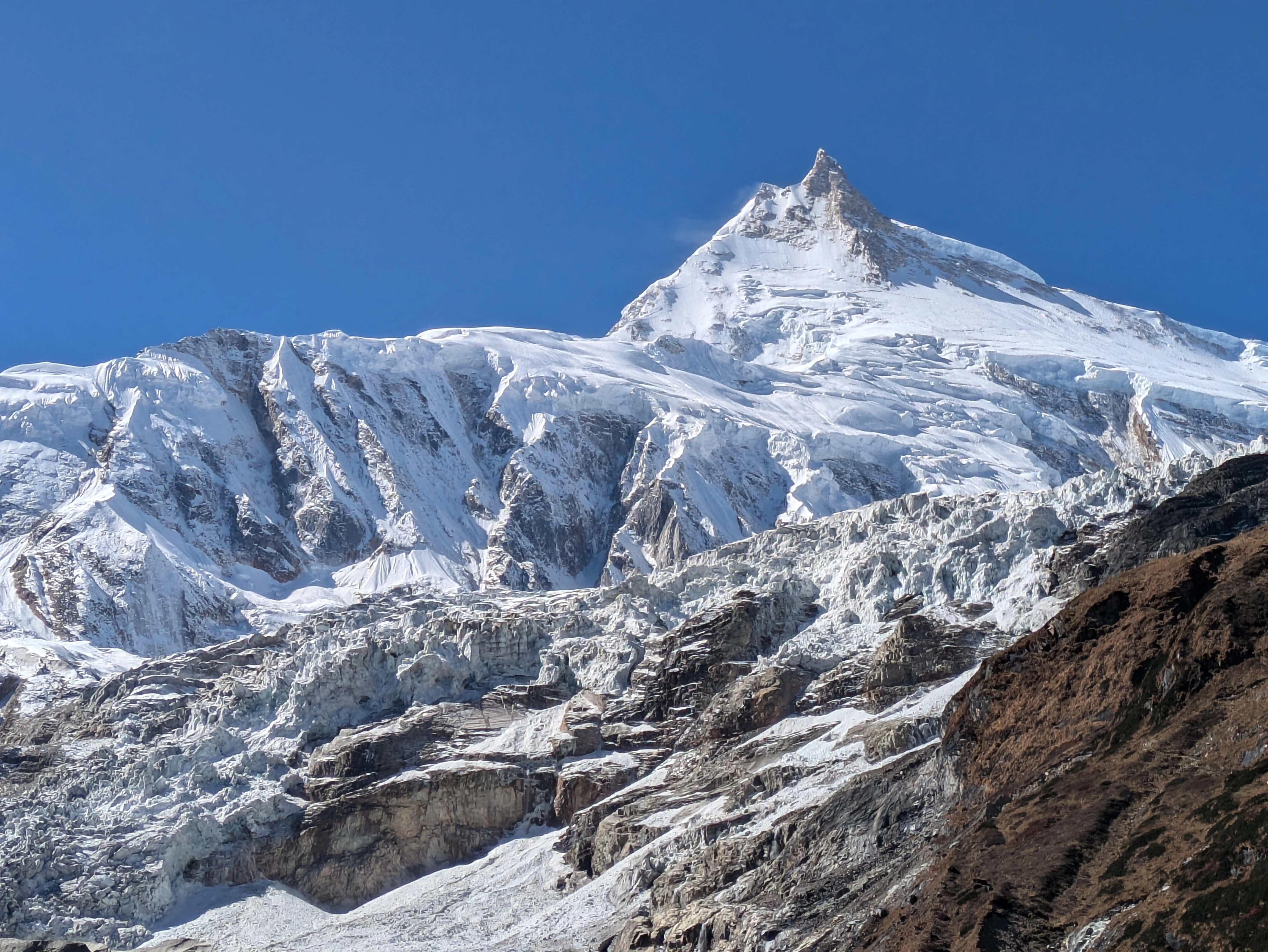
Begin your unforgettable adventure with the Manaslu Circuit Trekking Package, one of Nepal’s premier trekking experiences. This remarkable journey takes you through the pristine landscapes of the Manaslu Conservation Area, offering breathtaking views of the eighth-highest mountain in the world, Mount Manaslu (8,163m). Unlike the crowded trails of the Everest Base Camp and Annapurna Circuit, the Manaslu Circuit remains relatively untouched, providing a serene and authentic trekking experience.
This 13-day trek, extendable to 22 days with an optional side trip to the Tsum Valley, begins in the bustling town of Soti Khola and winds its way through stunning terrains, from subtropical forests to the stark, icy landscapes of the high Himalayas. You will traverse suspension bridges over the deep Buri Gandaki gorge, encounter traditional villages of the Gurungs, Bhutias, and Tibetan ethnic groups, and marvel at the panoramic vistas from the Larkya La Pass (5,167m), the highest point of the trek.
The Manaslu Circuit Trek offers an exceptional blend of natural beauty, cultural immersion, and physical challenge. With fewer trekkers on the trail, it promises a more secluded and intimate experience, allowing you to connect deeply with the stunning scenery and the rich traditions of the local communities. Whether you’re an experienced trekker or a novice adventurer, the Manaslu Circuit is a journey that will leave you awe-inspired and enriched.
Join our expertly guided Manaslu Circuit Trekking Package, designed to provide a seamless and safe trekking experience, complete with all necessary permits, accommodation, and support. Prepare for a trek that combines adventure, tranquility, and cultural exploration, making it one of the most rewarding trekking experiences in Nepal.
Itineraries
Altitude: 1,400m Welcome to Kathmandu! As you descend into the Kathmandu Valley, you’ll catch your first glimpse of the majestic Himalayas. After clearing customs, a representative will greet you and assist with the transfer to your hotel. Take some time to settle in and then venture out to explore the bustling streets of Thamel, a popular tourist district brimming with shops, cafes, and restaurants. Dinner tonight can be enjoyed at one of Thamel's many eateries offering both Western and local Nepali cuisine. Unique Feature: Kathmandu's cultural and historical charm, vibrant street life. Lunch Spot: Any local eatery in Thamel, offering a range of Nepali and international dishes.
Altitude: 1,400m Kathmandu is a city of immense cultural and historical significance. Begin your day with a visit to the iconic Boudhanath Stupa, one of the largest stupas in the world and a UNESCO World Heritage Site. Wander through the narrow streets, taking in the early morning calm before the city springs to life. Later, visit other significant sites such as Pashupatinath Temple and Swayambhunath (Monkey Temple). For dinner, consider a traditional Nepali meal at a local restaurant or a home-cooked dinner with a local family, arranged by your guide. Unique Feature: UNESCO World Heritage Sites, rich cultural experiences. Lunch Spot: A rooftop café near Boudhanath Stupa, offering views of the stupa and delicious Tibetan dishes.
• Distance/Duration: 160 km, approximately 9-11 hours • Route: Kathmandu → Kurintar → Arughat → Machhikhola The journey begins early in the morning with a reserved jeep from Kathmandu. The ride takes you out of the Kathmandu Valley, where the winding hillside roads lead to the Trishuli River’s edge. After about 3-4 hours of driving, you’ll stop at Kurintar for lunch. Though the meal may not be particularly memorable, it offers a needed break. From here, the journey continues towards Arughat and eventually Machhikhola, covering rugged terrain and narrow, rocky paths. This stretch can be exhausting, particularly the off-road sections. On the way, road closures and delays due to maintenance or stuck vehicles are common. Be prepared for a bumpy ride, but the anticipation of the trek ahead makes it worthwhile. Upon reaching Machhikhola in the evening, check into a teahouse, have dinner, and rest to prepare for the trek ahead. • Highlights: Scenic hills, rivers, and the bustling towns of Arughat and Gorkha Bazaar.
• Trek Duration: 6-7 hours • Highlights: Suspension bridges, waterfalls, traditional Gurung villages The trek begins in earnest today as you walk along the banks of the Budhigandaki River. The trail passes through dense forests, charming villages, and suspension bridges. After about 3-4 hours, you’ll stop for lunch at Dovan. Here, you’ll decide between two routes to Jagat: a shorter, less scenic vehicular road or a slightly longer trail featuring suspension bridges, waterfalls, and a Chinese bridge. Choosing the latter route promises a more fulfilling experience. Arriving at Jagat, a picturesque Gurung village, you’ll be greeted by stone-paved streets and traditional architecture. Spend the night in a teahouse, enjoying the serenity of the mountains.
• Trek Duration: 9-10 hours • Highlights: Lush forests, suspension bridges, Budhigandaki River Today’s trek is demanding, with steep ascents and descents through lush forests and alongside the Budhigandaki River. The trail offers several suspension bridges and stunning views of cliffs and cascading waterfalls. After a 4-hour trek, stop for lunch at Dovan. The trail beyond Dovan becomes increasingly rugged, requiring careful footing. The final stretch to Deng involves walking in the dark if you start late, so aim for an early start. Arrive at Deng, a small settlement where you’ll spend the night. Rest well for another challenging day ahead.
• Trek Duration: 9-10 hours • Highlights: Landslide areas, rocky cliffs, mountain glimpses The trail today follows the Budhigandaki River, passing through rocky hills and narrow paths. A notable section involves crossing a landslide-prone area near Gap (2100m). Take extra caution here as loose pebbles frequently fall onto the trail. After navigating this stretch, you’ll reach Gap for lunch. Feeling fatigued? Take a brief nap or hydrate before continuing the hike to Namrung. The ascent becomes steeper, but the beautiful Namrung village, surrounded by towering peaks and rich cultural heritage, rewards your efforts. Check into a teahouse and rejuvenate for the next day.
• Trek Duration: 6-7 hours • Highlights: Traditional villages, monasteries, colorful forests, mountain vistas Today’s trek is relatively shorter and easier compared to previous days. After breakfast, begin the hike toward Shyala. En route, stop at Lhi village, where the mountains start to appear prominently. Traditional architecture and prayer wheels add charm to the landscape. Continue to Lho village, where you’ll have lunch and the opportunity to visit a monastery perched on a hilltop. The trail descends briefly before climbing through colorful forests along the river to Shyala. This village sits atop a hill with jaw-dropping views of snow-capped mountains like Manaslu, making it a highlight of the trek.
• Trek Duration: 6-7 hours • Highlights: Manaslu Peak, Pungen Monastery, Mani Festival The day begins with a hike to Pungen Monastery (4050m), located 3 hours from Shyala. This small monastery offers incredible views of peaks such as Manaslu, Ngadi, and Manaslu North. According to locals, the area was once a settlement swept away by a landslide, creating a serene yet haunting atmosphere. After spending some time here, descend toward Samagaun. Upon arrival, you may witness the vibrant Mani Festival, where locals perform traditional dances and music. This cultural experience, combined with the natural beauty, makes the day unforgettable.
• Trek Duration: 7-9 hours (round trip to Base Camp) • Highlights: Birendra Tal, glacier views, high-altitude landscapes Today is dedicated to acclimatization and exploring the region. Begin with a short hike to Birendra Tal, a stunning glacier-fed lake 30 minutes from Samagaun. From there, continue the steep ascent to Manaslu Base Camp. The trail offers unparalleled views of glaciers and towering peaks. Spend some time at the base camp before descending to Samagaun for the night.
• Trek Duration: 3-4 hours • Highlights: Barren landscapes, Budhigandaki River views A shorter trek today takes you to the small village of Samdo. The trail follows the Budhigandaki River, with barren rocky hills and snow-capped peaks dominating the scenery. The relatively easy walk provides time to enjoy the views and conserve energy for the days ahead. Arrive at Samdo, a quiet village near the Tibet border, and rest overnight.
• Trek Duration: 7-9 hours (round trip to the border) • Highlights: Remote trails, cultural insights Spend the day exploring the trail to the Tibet border, which takes approximately 4-5 hours one way. The route offers panoramic views of rugged landscapes and insights into the cultural ties between Nepal and Tibet. After returning to Samdo, relax and prepare for the trek’s most challenging section.
• Trek Duration: 3-4 hours • Highlights: High-altitude landscapes, acclimatization hike Today’s trek leads to Dharamsala, the final stop before crossing the Larke Pass. The trail ascends gradually, with increasingly barren and rocky terrain. Upon arrival at Dharamsala, have lunch and take an acclimatization hike to a nearby hill (about 200m higher than the tea house). This helps prepare your body for sleeping at high altitudes. Go to bed early to rest for the next day’s challenging climb.
• Trek Duration: 10-12 hours • Highlights: Larke Pass, panoramic mountain views, Bhimtang village Wake up around 3-4 AM to start the ascent to Larke Pass, the trek’s highest point. The climb is steep and strenuous, taking about 4-5 hours. The views from the pass are extraordinary, with snow-covered peaks and a sense of accomplishment. After crossing the pass, begin the long descent to Bhimtang, a picturesque village in a valley blessed by the presence of Manaslu. Arrive exhausted but elated after completing the most challenging section of the trek.
• Trek Duration: 6-7 hours (trek), 3-4 hours (drive) • Highlights: Goa village, lush forests, riverside trails The trek descends further today through lush forests and alongside rivers. Stop for lunch at Goa village before continuing to Tilije, the trek’s endpoint. From Tilije, board a reserved jeep for a rugged 3-4 hour drive to Besishahar. Celebrate the completion of the trek with a well-deserved meal and rest.
• Duration: 6-8 hours (drive) Conclude the journey with a scenic drive back to Kathmandu. The reserved jeep ensures comfort and a timely arrival. Reflect on the incredible adventure as you descend from the mountains and return to city life.
Depending on your flight schedule, you may have time to explore more of Kathmandu or do some last-minute shopping. Your representative will transfer you to the airport for your departure flight, concluding your memorable Manaslu Circuit Trek. Unique Feature: Last chance to experience Kathmandu's vibrant atmosphere. Lunch Spot: Local café near your hotel, or at the airport, offering a range of options before your flight.
Route Map
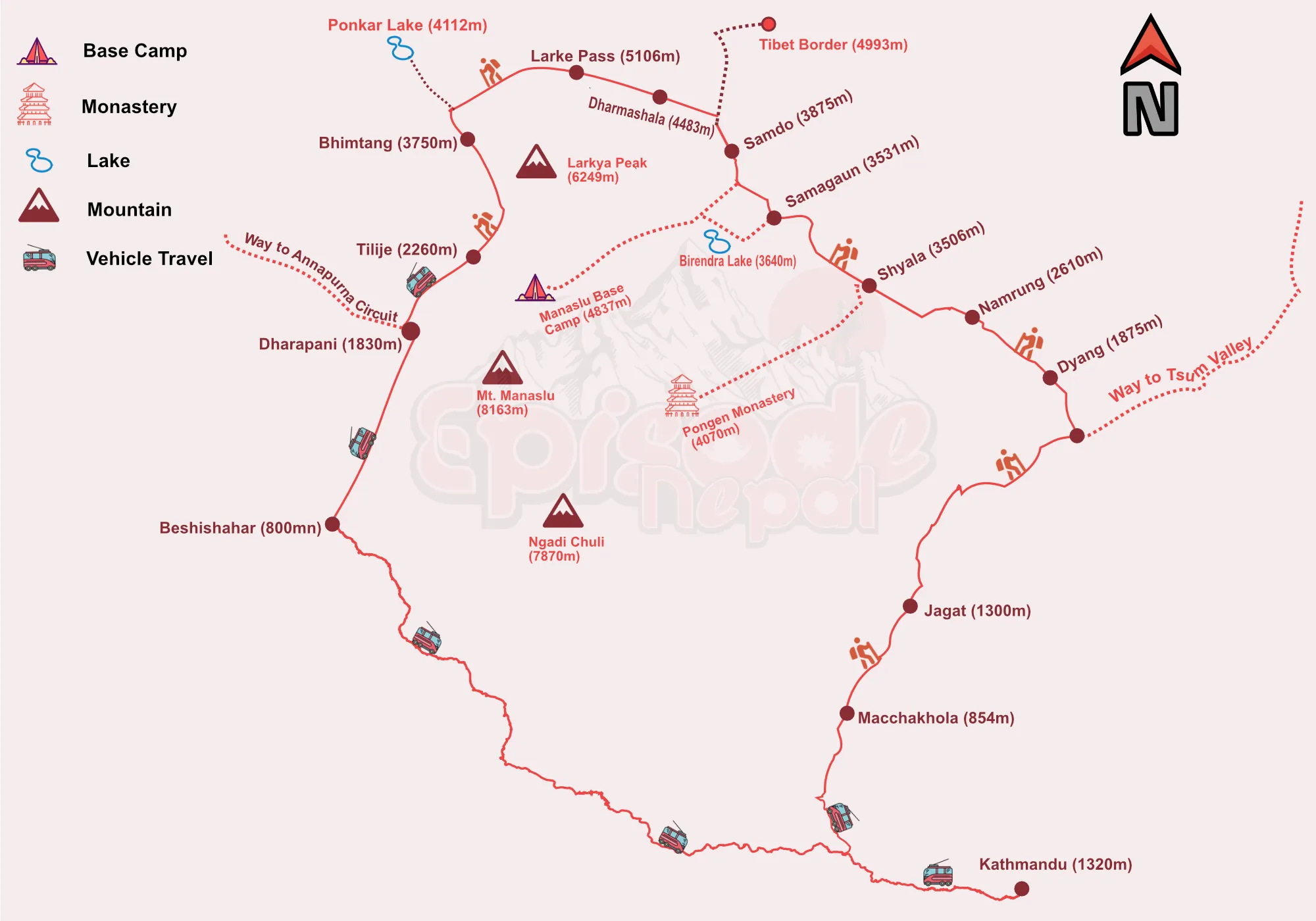
Elevation Profile
Inclusion
- Permits and Fees: All necessary permits for the Manaslu Circuit Trek, including the Manaslu Restricted Area Permit (MRAP), Annapurna Conservation Area Permit (ACAP), and Manaslu Conservation Area Permit (MCAP), are included.
- Meals: Full-board meals during the trek, including breakfast, lunch, and dinner. Enjoy a variety of traditional Nepali and Tibetan dishes, with options for Western meals.
- Accommodation: Accommodation in teahouses and lodges along the trek. These are typically twin-sharing rooms with basic amenities.
- Guide and Porter Services: Professional English-speaking guide and porter services to assist with navigation, carry your luggage, and provide cultural insights.
- Transportation: Private transportation from Kathmandu to the trek start point and return, typically in a 4x4 vehicle for comfort and safety.
- Medical Kit: A comprehensive first aid kit is available with the guide for emergencies. It is also recommended to carry personal medication.
- Trekking Equipment: Rental of essential trekking gear, if needed, such as sleeping bags, trekking poles, and down jackets (note: availability may vary).
- Local Taxes and Charges: All local taxes and charges related to the trek, including those for conservation areas and permits.
- International Flights: Airfare to and from Kathmandu is not included. Trekkers are responsible for booking their own flights.
- Personal Expenses: Costs for personal items such as snacks, drinks, and souvenirs are not included.
- Travel Insurance: Travel insurance is not included but is essential. It should cover high-altitude trekking, medical emergencies, and evacuation.
- Visa Fees: Nepal visa fees are not included. Obtain your visa upon arrival in Kathmandu or in advance.
- Additional Accommodation: Accommodation before and after the trek in Kathmandu or during rest days is not included.
- Optional Activities: Costs for optional activities such as sightseeing tours in Kathmandu, cultural experiences, and extra excursions are not included.
- Tips and Gratuities: Tips for guides, porters, and other support staff are not included. These are typically given at the end of the trek based on your satisfaction with the service.
- Emergency Evacuation: Costs associated with emergency evacuation due to health issues or other unforeseen circumstances are not included.
Exclusion
Information
Information:
Best Time to Trek
Choosing the right time to embark on the Manaslu Circuit Trek is crucial for a successful and enjoyable adventure. The trek is renowned for its diverse landscapes and high-altitude challenges, and the weather conditions can greatly influence your experience. Here’s a comprehensive guide to help you determine the best time for your trek:
Spring (March to May)
- Optimal Weather Conditions: Spring is one of the best times to trek the Manaslu Circuit. During this season, you can expect mild temperatures, clear skies, and minimal snowfall, which provides excellent visibility of the majestic Himalayan peaks.
- Blooming Flora: The lower altitudes are lush and vibrant with blooming rhododendrons and wildflowers, adding a splash of color to the landscape and enhancing your trekking experience.
- Ideal for Acclimatization: The moderate weather makes it easier to acclimatize as you ascend, reducing the risk of altitude sickness and ensuring a more comfortable journey.
- Peak Trekking Season: While the trails are popular during this period, they are still less crowded than those on the Annapurna or Everest circuits, offering a balance between solitude and social interaction.
Autumn (September to November)
- Stable Weather Patterns: Autumn is another excellent time for trekking the Manaslu Circuit. The post-monsoon season brings stable weather, clear skies, and crisp temperatures, making for optimal trekking conditions.
- Breathtaking Views: The clear autumn air enhances visibility, allowing for stunning panoramic views of the Himalayas and surrounding landscapes.
- Comfortable Temperatures: Daytime temperatures are generally pleasant, while the cooler nights require appropriate layering. The weather is perfect for trekking without extreme cold or heat.
- Festive Atmosphere: Autumn coincides with several local festivals, offering trekkers a chance to witness and participate in cultural celebrations, enriching their overall experience.
Winter (December to February)
- Challenging Conditions: Winter trekking on the Manaslu Circuit presents more challenges due to cold temperatures and potential snowfall. The high-altitude passes, particularly Larkya La, can be snow-covered and icy, making the trek more demanding.
- Fewer Trekkers: Winter sees fewer trekkers, providing a sense of solitude and exclusivity. However, this comes with the trade-off of harsher weather conditions and potential trail closures due to snow.
- Preparation Required: For those who are well-prepared and experienced, winter trekking can offer a serene and pristine environment. It is crucial to have appropriate gear and be prepared for unexpected weather changes.
Monsoon (June to August)
- Heavy Rainfall: The monsoon season brings heavy rainfall to Nepal, which can make trekking the Manaslu Circuit challenging. The trails may be slippery and prone to landslides, and the high levels of humidity can be uncomfortable.
- Limited Visibility: Frequent rain and cloud cover can obscure views of the mountains, diminishing the scenic experience.
- Lower Altitude Treks: If you prefer trekking during the monsoon, consider lower altitude trails that are less affected by the heavy rains.
Frequently Asked Questions
The ideal times to trek the Manaslu Circuit are during the pre-monsoon (spring) season from March to May and the post-monsoon (autumn) season from September to November. During these periods, the weather is generally stable, the skies are clear, and the views are spectacular.
Yes, trekking the Manaslu Circuit requires several permits: the Manaslu Restricted Area Permit (MRAP), the Annapurna Conservation Area Permit (ACAP), and the Manaslu Conservation Area Permit (MCAP). These permits are essential for entry into restricted areas and conservation zones.
The Manaslu Circuit Trek is considered moderately to highly challenging. It involves trekking at high altitudes, with the highest point being Larkya La Pass at 5,160 meters. Trekkers should be in good physical condition, have some trekking experience, and be prepared for long days of walking.
Accommodations along the Manaslu Circuit Trek consist of teahouses and lodges. These are basic but comfortable, offering twin-sharing rooms and communal dining areas. Facilities can be more limited in remote areas, but they provide a cozy place to rest after a day of trekking.
Meals on the trek include traditional Nepali dishes like dal bhat (rice and lentils), Tibetan bread, momo (dumplings), and a variety of soups and noodles. Western options such as pasta, pancakes, and omelets are also available. Meals are prepared fresh at the teahouses and are designed to provide the energy needed for trekking.
It isn’t possible to trek the Manaslu Circuit independently, hiring a guide and porter is a must, as Manaslu Circuit Trek is one of the treks that require Special Permit. A guide can help navigate the trails, provide insights into local culture, and ensure safety. A porter can carry heavy loads, allowing you to trek more comfortably.
Proper acclimatization is crucial for trekking at high altitudes. The itinerary includes acclimatization days to help adjust to the altitude gradually. Staying hydrated, taking it slow, and recognizing the symptoms of altitude sickness are essential for a safe trek.
Packing essentials include sturdy trekking boots, warm clothing, a sleeping bag, trekking poles, a first aid kit, water purification tablets, and personal items like toiletries and snacks. Layered clothing is important to adapt to varying temperatures along the trail.
Yes, comprehensive travel insurance is essential for the Manaslu Circuit Trek. It should cover high-altitude trekking, medical emergencies, evacuation, trip cancellations, and lost or stolen belongings. Ensure your insurance policy is valid for the entire duration of your trek.
